
< Stromberg Bulletins View all
81. HOW LESS CAN BE MORE
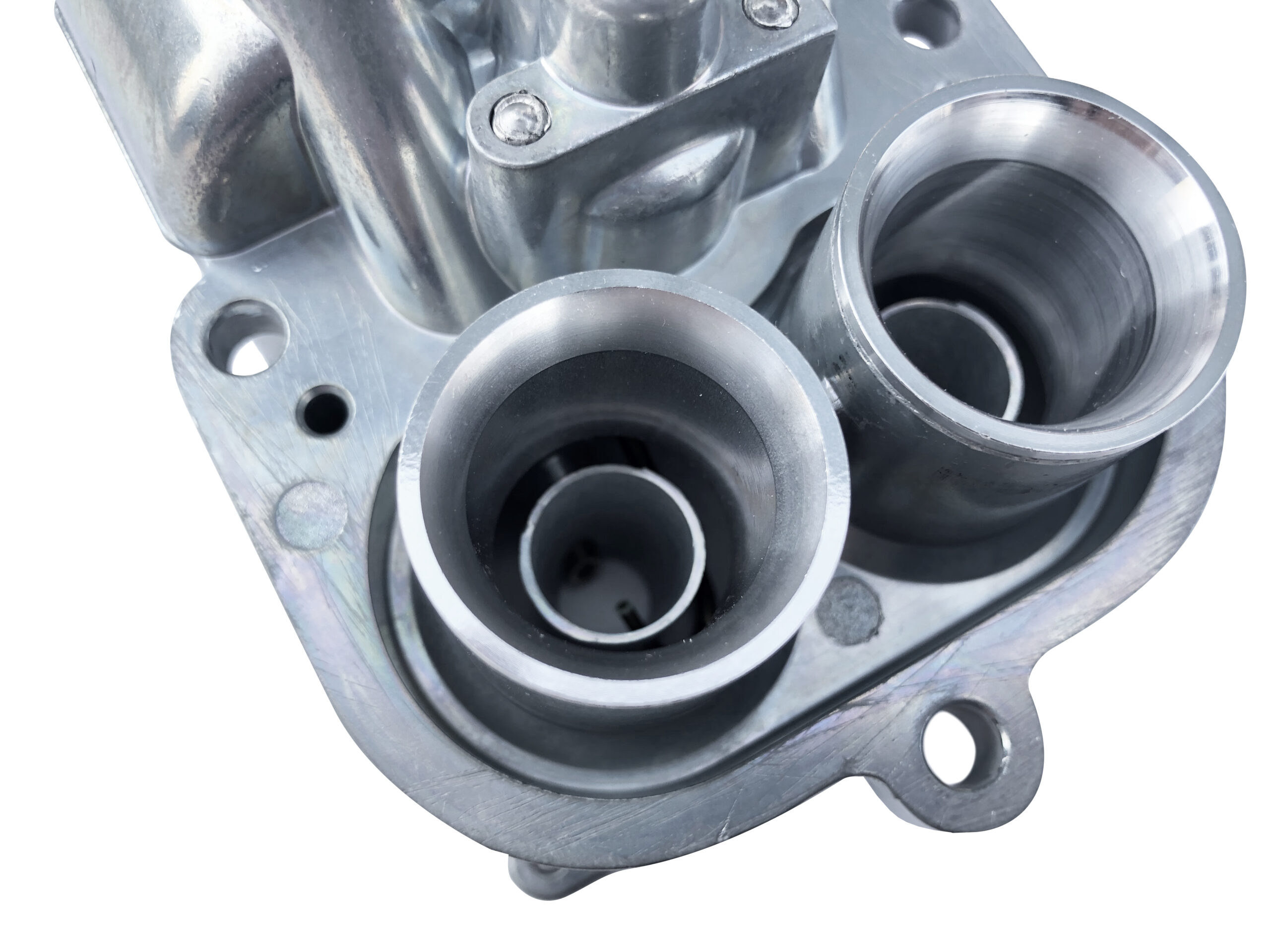
THE NEW 81 FROM STROMBERG
We all know about the Stromberg 81 carburetor, right? The 97’s smaller brother. Standard fit on the infamous ‘thrifty’ Ford V8-60 motor from around 1937 to 1940. Designed with a tiny 0.81 inch diameter venturi and 1.0625 inch throttle bores. Rated at various different cfm (cubic feet per minute of air) depending on who you talk to and whose equipment you test it on. Hard to find. And pricey too, nowadays. Yet more importantly, holder of almost legendary status among the 4-banger (and V8-60) cognoscenti.
Why? Because two of these babies on pretty much any 4-banger Ford motor (or V8-60 Midget for example) is, and has always been, the sweet set-up if you want both high performance AND road-going flexibility. In short, the smaller 81 venturi are better suited to the smaller engine size. Two 97s might work great on a flathead Ford V8, but stick them on a smaller engine and they will see far lower vacuum at the carburetor (same straw – smaller lungs). Use carbs with smaller venturi and they will see higher vacuum, which helps maintain quicker air speed/throttle response when you open up from lower rpm.
VENTURI SLEEVE
Early R&D was carried out for us by Norm Schenck at Competition Fuel Systems, in Michigan, who stuck an original 81 on his flow bench and got 109.6 cfm max airflow at 1.5in HG vacuum. 3D modelling then helped us develop a short venturi insert with a tiny step at the bottom so it is clamped into the 97 bowl casting by the new 81 base casting. In final manufacture, the real parts actually flowed 116cfm due to the super-smooth finish on the inserts and accurate turbulance-cheating fit. But most important, the booster signal curve is the same shape as the old 81, but a tiny bit stronger for even better response.
ACCELERATOR PUMP WELL SLEEVE
The 81 carburetor has a half-inch accelerator pump bore. We make 81 pumps so decided to make a press-in sleeve for the pump well, adding a small 0-ring at the bottom to stop the gasoline returning back up the gap between sleeve and pump wall.
NEW 81 BASE CASTING
While we did prototype tests with aluminum inserts in a 97 base casting, sleeving the 97 base casting down to 81 size was not a full production option. So we tooled up for a whole new cast iron base casting to original 81 spec.
After extensive testing, we decided on 0.036in main jets (original stock jetting was 0.035in) with a stock Number 71 power valve. We were also able to retain the stock 97-size air bleed sizes – 0.040″ high speed and 0.103″ low speed (idle)…and the stock 97 emulsion tubes. This means 1.0625 inch throttle bores with new OE 81-size throttle plates, which are now also available to 81 carb rebuilders of course. The 81 always used the 97-style throttle shaft so we had that covered. Note how the transition ports exit just above the throttle plate.
So how do they go? Well, the first two off the line went to Charlie Yapp, in Ohio, to test on his own 1929 Cabin Speedster. Charlie is known for publishing Secrets, Vintage Speed & Sport magazine, covering all things Ford four-banger for near on 30 years now. Click the link to read his testimonial in our bulletin ‘Stromberg 81s on Test’.
